
Embedded Industrial PC: Features & Applications
What is an embedded industrial PC? Learn how embedded computers differ from traditional PCs and how to select one for automation, IoT, and edge computing.
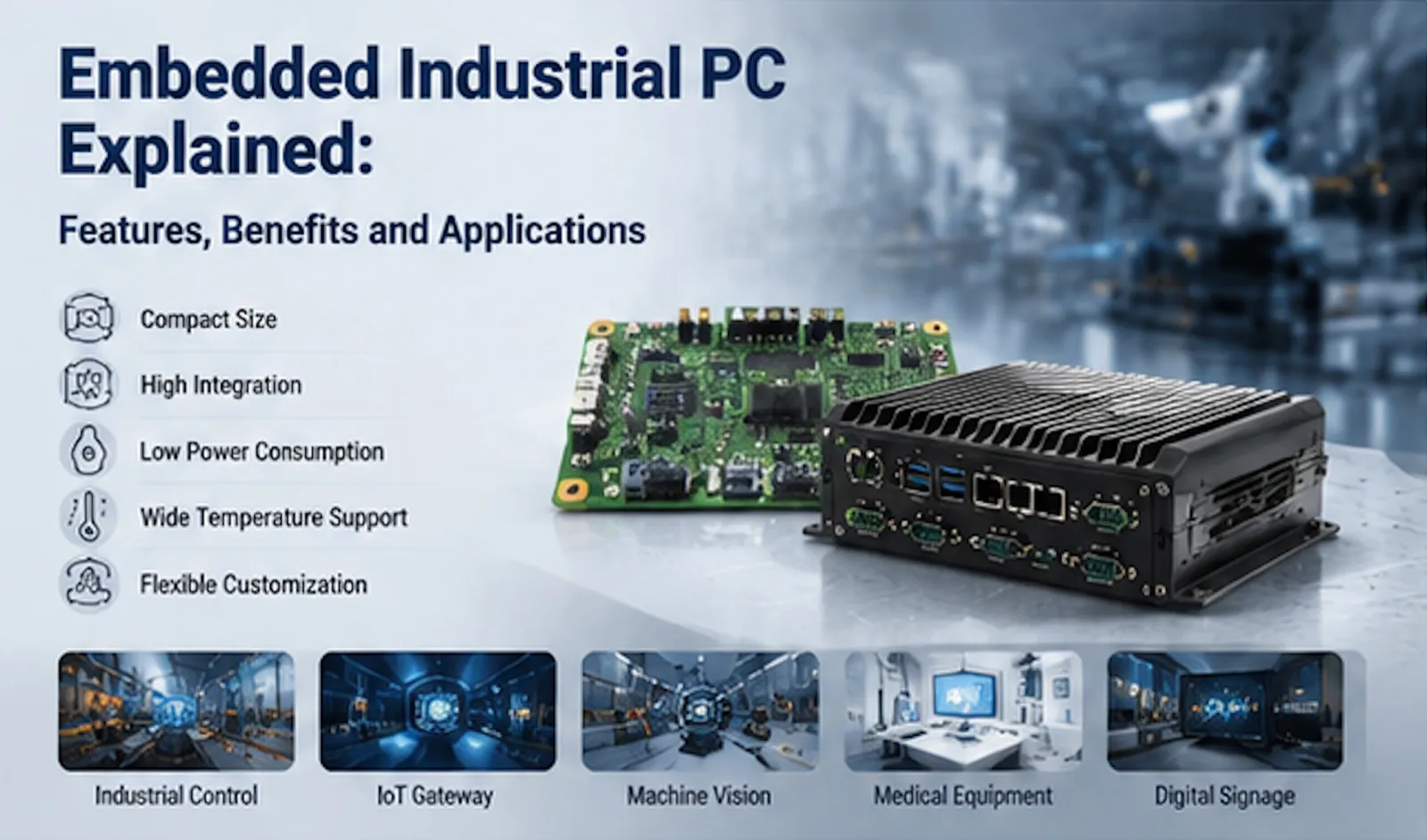
Modern industrial systems require computers that are smaller, more reliable, and easier to integrate into machines and automation equipment.
An embedded industrial PC is a computing platform designed to be integrated directly into industrial systems, machines, and intelligent devices.
Unlike traditional desktop computers, embedded industrial PCs are designed for:
- Compact installation
- Long-term operation
- Industrial communication
- Stable performance
- Application-specific computing
Embedded industrial computers are widely used in:
- Factory automation
- Industrial IoT (IIoT)
- Machine control
- Robotics
- Transportation systems
- Smart manufacturing
- Edge computing
IPCtech is an industrial computer manufacturer providing embedded industrial PCs, fanless industrial computers, industrial box PCs, and customized computing solutions for global industrial applications.
What Is an Embedded Industrial PC?
An embedded industrial PC is a compact industrial computer designed to perform dedicated computing tasks inside machines, equipment, or automated systems.
The word “embedded” means the computer is integrated into a larger system rather than operating as a standalone device.
Examples include:
- A computer installed inside a robot
- A controller integrated into manufacturing equipment
- A computing module inside an inspection machine
- An industrial gateway collecting factory data
Embedded industrial PCs combine:
- Computer processing capability
- Industrial reliability
- Compact mechanical design
- Flexible integration options
Embedded Industrial PC vs Traditional Industrial PC
Although both belong to the industrial computer category, embedded PCs and traditional industrial PCs have different design goals.
| Feature | Embedded Industrial PC | Traditional Industrial PC |
|---|---|---|
| Size | Compact design | Larger chassis |
| Installation | Integrated into equipment | Standalone installation |
| Application | Dedicated systems | General industrial computing |
| Power Consumption | Usually lower | Higher performance options |
| Customization | Highly customizable | Standardized models |
| Typical Use | Machines and devices | Factories and control rooms |
Embedded industrial PCs are ideal when computing needs to become part of the machine itself.
Key Features of Embedded Industrial PCs
1. Compact and Flexible Design
One of the biggest advantages of embedded computers is their compact size.
Industrial equipment often has limited installation space.
Embedded industrial PCs can be installed in:
- Control cabinets
- Machinery
- Robotic systems
- Automated equipment
Compact designs help engineers integrate computing capability without increasing system size.
2. Low Power Consumption
Many embedded industrial PCs use efficient processors designed for continuous operation.
Advantages include:
- Lower energy consumption
- Reduced heat generation
- Easier thermal management
This makes them suitable for:
- Edge devices
- Industrial gateways
- Remote monitoring systems
3. Industrial Reliability
Embedded industrial computers are designed for demanding environments.
Typical features include:
- Fanless cooling
- Industrial components
- Wide temperature support
- Vibration resistance
These features help ensure stable operation in:
- Manufacturing plants
- Outdoor equipment
- Transportation systems
4. Rich Industrial Interfaces
Embedded industrial PCs usually provide interfaces required by industrial systems.
Common interfaces include:
RS232 / RS485 / RS422
Used for:
- PLC communication
- Sensors
- Industrial instruments
GPIO
Used for:
- Machine signals
- Digital control
- Automation systems
CAN Bus
Used for:
- Robotics
- Vehicle systems
- Industrial networks
Multiple LAN Ports
Used for:
- Industrial Ethernet
- Network communication
- Data collection
5. Fanless Embedded Design
Many embedded industrial PCs use fanless architecture.
Benefits include:
Reduced Failure Risk
No mechanical cooling fan means fewer moving parts.
Better Dust Protection
Suitable for:
- Factory environments
- Manufacturing equipment
- Industrial cabinets
Lower Maintenance
Fanless systems require less cleaning and maintenance.
Applications of Embedded Industrial PCs
Embedded Industrial PC for Factory Automation
Factory automation systems require reliable computing close to production equipment.
Embedded PCs are used for:
- Machine control
- Data collection
- Equipment monitoring
- Process optimization
Common requirements:
- Stable operation
- Industrial communication
- Compact installation
Embedded Industrial PC for Industrial IoT (IIoT)
Industrial IoT connects machines, sensors, and data platforms.
Embedded computers act as intelligent gateways between industrial equipment and software systems.
Applications include:
- Data acquisition
- Equipment monitoring
- Remote diagnostics
- Predictive maintenance
Embedded industrial PCs help factories collect and process data closer to the machines.
Embedded Industrial PC for Edge Computing
Traditional cloud computing sends data to remote servers.
Edge computing processes data locally near the source.
Embedded industrial PCs support edge computing by providing:
- Local data processing
- Lower latency
- Faster response
- Improved data privacy
Applications:
- AI inspection
- Real-time monitoring
- Industrial analytics
Embedded Industrial PC for Machine Vision
Machine vision systems require compact and reliable computers.
Embedded PCs can be used for:
- Image processing
- Camera control
- Automated inspection
Important requirements include:
- High-performance processors
- Multiple camera interfaces
- Stable operation
Embedded Industrial PC for Robotics
Robotic systems require computers that can fit into limited spaces while providing reliable control.
Applications include:
- Robot controllers
- Autonomous systems
- AGV platforms
Important features:
- Real-time processing
- Industrial communication
- Compact design
Embedded Industrial PC for Transportation Systems
Transportation applications require:
- Rugged design
- Wide temperature operation
- Stable performance
Examples:
- Vehicle computing
- Railway systems
- Traffic monitoring
How to Choose an Embedded Industrial PC?
When selecting an embedded industrial computer, consider the following factors.
1. Processing Performance
Choose the right processor according to application requirements.
Entry-Level Applications
Suitable for:
- Data collection
- Industrial gateways
- Basic control
High-Performance Applications
Suitable for:
- Machine vision
- AI inference
- Complex automation
2. Size and Installation Requirements
Consider:
- Available installation space
- Mounting method
- Cabinet design
Embedded computers should fit naturally into the target equipment.
3. Industrial Interfaces
Check required connections:
- RS232
- RS485
- CAN Bus
- GPIO
- LAN
- USB
4. Environmental Requirements
Consider:
- Temperature range
- Dust protection
- Vibration resistance
- Power stability
5. Customization Capability
Many embedded applications require customization.
A capable embedded industrial PC manufacturer should support:
- Customized I/O
- Mechanical modifications
- Hardware configuration
- System integration
Why Choose IPCtech Embedded Industrial PCs?
IPCtech provides embedded industrial computing solutions designed for modern industrial applications.
Product categories include:
- Embedded Industrial PCs
- Fanless Industrial PCs
- Industrial Box PCs
- Industrial Panel PCs
- Edge Computing Systems
IPCtech supports customers in industries including:
- Factory Automation
- Machine Vision
- Robotics
- Industrial IoT
- Smart Manufacturing
With industrial design experience and customization capability, IPCtech helps global customers integrate reliable computing platforms into intelligent machines and automation systems.
Frequently Asked Questions (FAQ)
What is an embedded industrial PC?
An embedded industrial PC is a compact computer designed to be integrated into industrial machines, equipment, and automation systems.
What is the difference between embedded PC and industrial PC?
An embedded PC focuses on compact integration and dedicated applications, while an industrial PC usually provides broader computing capability for industrial environments.
Are embedded industrial PCs reliable?
Yes. Industrial embedded computers are designed with features such as fanless cooling, industrial components, and long-term operation capability.
Where are embedded industrial computers used?
They are used in:
- Factory automation
- Industrial IoT
- Robotics
- Machine vision
- Edge computing
- Transportation
Can embedded industrial PCs support AI applications?
Yes. Many embedded industrial computers support edge AI applications such as visual inspection and intelligent manufacturing.